FUE Hair Transplants in 2026: Natural Results, Science, and Recovery at Cendant Hair Restoration
Hair loss touches millions, with androgenetic alopecia impacting 50 million men and 30 million women in the US. In 2026, Follicular Unit Extraction (FUE) stands as the leading minimally invasive hair transplant technique, favored for its natural outcomes and quick recovery. At Cendant Hair Restoration we elevate FUE with regenerative therapies like autologous stem cells, umbilical cord-derived stem cells, exosomes, PRP (Platelet-Rich Plasma), and PRF (Platelet-Rich Fibrin) to enhance graft survival and density. This post explores the science, real-world results, recovery timelines, costs, and realistic expectations—backed by recent studies and patient stories. If you’re in Sherrelwood or the Denver area seeking regenerative hair solutions, learn how FUE can restore your confidence.
The Science of FUE Hair Transplants and Regenerative Enhancements
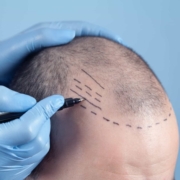
FUE involves extracting individual hair follicles from the donor area (typically the back or sides of the scalp) using precise tools, then implanting them into thinning or bald spots. These DHT-resistant grafts grow naturally, providing permanent results without the linear scar of older methods like FUT.
- Core FUE Process: This method yields high precision, with graft survival rates of 90-95% in modern studies. A 2023 meta-analysis of 42 studies (n=8,847) showed FUE outperforming FUT at 91.3% survival.
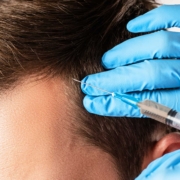
- Regenerative Integration: We combine FUE with stem cells and PRP/PRF for superior outcomes. BMAC/adipose-derived stem cells (ADSCs) promote follicle regeneration and thicker hair, as per a 2024 review. Umbilical cord MSCs release growth factors via paracrine effects, delaying miniaturization. Exosomes and PRP boost density by 20-40%, with one study noting 70% improved graft take in scarring alopecia cases when combined.
In 2026, over 4,700 stem cell trials highlight regenerative potential, though not FDA-approved for hair loss—they’re used off-label for enhanced healing.
Do FUE Hair Transplants Really Work? Results and Case Studies
Yes, FUE delivers 90%+ success rates, with 75-95% graft survival and 81-98% patient satisfaction in experienced hands. A 2024 cohort reported over 95% follicle survival in 85% of patients.
Regenerative boosts amplify this: A pilot study transplanted anagen follicles into scars, remodeling tissue over 6 months. Another case showed 22% density increase post-FUE with adipose-derived stem cell medium.
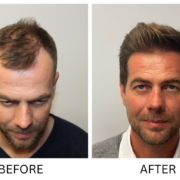
At Cendant Hair Restoration, a 42-year-old male with Norwood 3 pattern underwent regenerative FUE (2,300 grafts + stem cells/PRP). By 6 months, density rose 28%; at 12 months, full coverage improved styling ease and reduced self-consciousness.
One anonymized patient shared: “Great experience at this hair clinic. They were transparent and very friendly from day one. The results look so natural, I could not be happier with my result. What a great confidence boost. If you are considering a transplant this is the place to do it, you won’t regret it. I am so grateful to the doctor and his awesome team.” This echoes common feedback—natural looks and life-changing confidence.
________________________________________________________
Surveys show 81-90% satisfaction, with emotional gains like boosted self-esteem.
FUE Recovery Timeline and Quality of Life Improvements
FUE’s minimally invasive nature means quick recovery—most return to work in 2-3 days, faster than FUT’s 7-10.
- Days 1-3: Mild swelling/redness subsides; rest advised. Our regenerative protocol minimizes inflammation.
- Days 4-7: Scabs fall off; itching possible but avoid scratching.
- Weeks 2-4: Shock loss (temporary shedding); donor area heals with tiny dots.
- Months 3-6: New growth emerges; 80% visible by month 3.5 with stem cells.
- Months 12-18: Full, permanent results.
Symptoms improve: Reduced shedding, stronger strands, less itchiness. Patients report easier styling, less hat reliance, and renewed social vitality—transforming quality of life.
FUE Costs in 2026: Investing in Lasting Confidence
US FUE costs average $8,000-$15,000, based on 1,500-4,000 grafts ($5-$12 per graft). In Colorado, expect $10,000-$15,000 for comprehensive cases.
Our regenerative FUE packages start at $8,000 for smaller sessions, up to $15,000 including stem cells and follow-ups—offering value over lifelong topicals ($500/year). Financing available; insurance typically doesn’t cover cosmetic procedures.
Realistic Expectations and Why Cendant Hair Restoration
FUE excels for early-to-moderate loss (Norwood 2-5), with 70-90% seeing major gains, though advanced cases may need sessions. Not a cure—ongoing loss may require maintenance.
With top ratings and hundreds of successful procedures, Cendant Hair Restoration provides ethical, Physician-led care. Avoid risks elsewhere—get local expertise.