FUE Hair Transplants in 2026: Natural Results, Science, and Recovery at Cendant Hair Restoration

Hair loss touches millions, with androgenetic alopecia impacting 50 million men and 30 million women in the US. In 2026, Follicular Unit Extraction (FUE) stands as the leading minimally invasive hair transplant technique, favored for its natural outcomes and quick recovery. At Cendant Hair Restoration in Scottsdale, we elevate FUE with regenerative therapies like autologous stem cells, umbilical cord-derived stem cells, exosomes, PRP (Platelet-Rich Plasma), and PRF (Platelet-Rich Fibrin) to enhance graft survival and density. This post explores the science, real-world results, recovery timelines, costs, and realistic expectations—backed by recent studies and patient stories. If you’re in Sherrelwood or the Denver area seeking regenerative hair solutions, learn how FUE can restore your confidence.

The Science of FUE Hair Transplants and Regenerative Enhancements

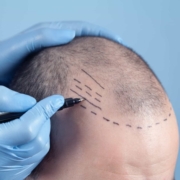
FUE involves extracting individual hair follicles from the donor area (typically the back or sides of the scalp) using precise tools, then implanting them into thinning or bald spots. These DHT-resistant grafts grow naturally, providing permanent results without the linear scar of older methods like FUT.

  • Core FUE Process: This method yields high precision, with graft survival rates of 90-95% in modern studies. A 2023 meta-analysis of 42 studies (n=8,847) showed FUE outperforming FUT at 91.3% survival.
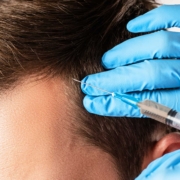
  • Regenerative Integration: We combine FUE with stem cells and PRP/PRF for superior outcomes. BMAC/adipose-derived stem cells (ADSCs) promote follicle regeneration and thicker hair, as per a 2024 review. Umbilical cord MSCs release growth factors via paracrine effects, delaying miniaturization. Exosomes and PRP boost density by 20-40%, with one study noting 70% improved graft take in scarring alopecia cases when combined.

In 2026, over 4,700 stem cell trials highlight regenerative potential, though not FDA-approved for hair loss—they’re used off-label for enhanced healing. Our Scottsdale AZ clinic customizes this for optimal, natural regrowth.

Do FUE Hair Transplants Really Work? Results and Case Studies

Yes, FUE delivers 90%+ success rates, with 75-95% graft survival and 81-98% patient satisfaction in experienced hands. A 2024 cohort reported over 95% follicle survival in 85% of patients.

Regenerative boosts amplify this: A pilot study transplanted anagen follicles into scars, remodeling tissue over 6 months. Another case showed 22% density increase post-FUE with adipose-derived stem cell medium.

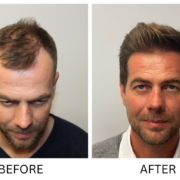
At Cendant Hair Restoration, a 42-year-old male with Norwood 3 pattern underwent regenerative FUE (2,300 grafts + stem cells/PRP). By 6 months, density rose 28%; at 12 months, full coverage improved styling ease and reduced self-consciousness.

One anonymized patient shared: “Great experience at this hair clinic. They were transparent and very friendly from day one. The results look so natural, I could not be happier with my result. What a great confidence boost. If you are considering a transplant this is the place to do it, you won’t regret it. I am so grateful to the doctor and his awesome team.” This echoes common feedback—natural looks and life-changing confidence.

________________________________________________________

Surveys show 81-90% satisfaction, with emotional gains like boosted self-esteem.

FUE Recovery Timeline and Quality of Life Improvements

FUE’s minimally invasive nature means quick recovery—most return to work in 2-3 days, faster than FUT’s 7-10.

  • Days 1-3: Mild swelling/redness subsides; rest advised. Our regenerative protocol minimizes inflammation.
  • Days 4-7: Scabs fall off; itching possible but avoid scratching.
  • Weeks 2-4: Shock loss (temporary shedding); donor area heals with tiny dots.
  • Months 3-6: New growth emerges; 80% visible by month 3.5 with stem cells.
  • Months 12-18: Full, permanent results.

Symptoms improve: Reduced shedding, stronger strands, less itchiness. Patients report easier styling, less hat reliance, and renewed social vitality—transforming quality of life.

FUE Costs in 2026: Investing in Lasting Confidence

US FUE costs average $8,000-$15,000, based on 1,500-4,000 grafts ($5-$12 per graft). In Colorado, expect $10,000-$15,000 for comprehensive cases.

Our regenerative FUE packages start at $8,000 for smaller sessions, up to $15,000 including stem cells and follow-ups—offering value over lifelong topicals ($500/year). Financing available; insurance typically doesn’t cover cosmetic procedures.

Realistic Expectations and Why Cendant Hair Restoration

FUE excels for early-to-moderate loss (Norwood 2-5), with 70-90% seeing major gains, though advanced cases may need sessions. Not a cure—ongoing loss may require maintenance.

With top ratings and hundreds of successful procedures, Cendant Hair Restoration in Scottsdale provides ethical, Physician-led care. Avoid risks elsewhere—get local expertise.

 

Who Actually Needs the FUE + Stem Cell Combo? Ideal Candidates, Cost-Benefit Analysis & When to Skip It


The FUE + stem cell combo (also called stem cell-enhanced FUE or regenerative FUE) isn’t necessary for everyone facing hair loss. It’s a premium upgrade that adds regenerative elements, typically adipose-derived stem cells, exosomes, or similar, to a standard Follicular Unit Extraction (FUE) transplant. The goal is better graft survival, faster healing, thicker density in surrounding areas, and sometimes stimulation of dormant follicles.

This approach shines when standard FUE alone might fall short in challenging cases. Below is a breakdown of ideal candidates, realistic cost-benefit trade-offs, and clear scenarios to skip it.

Ideal Candidates for the FUE + Stem Cell Combo

  1. Advanced Norwood 4–6 (or equivalent in women) Patients with significant balding (large crown/thinning vertex + receding hairline) often have limited donor hair. Adding stem cells can improve graft survival (some studies show 10–20%+ gains, e.g., from ~80–90% in standard FUE to 90–95%+ in enhanced cases) and boost density in non-transplanted thinning zones. This maximizes results from fewer grafts.
  2. Younger patients (typically under 35–40) wanting maximum long-term density Younger individuals often progress further over time. The combo helps by potentially awakening nearby dormant follicles and improving overall scalp health, reducing the “see-through” look years later. It’s popular for those prioritizing aggressive, natural-looking fullness rather than just coverage.
  3. Previous transplant patients needing “rescue” or repair density If a prior FUE left thin results, poor growth, or donor depletion, stem cells can enhance a touch-up procedure. They support better integration of new grafts, reduce scarring/fibrosis, and improve outcomes in compromised scalps.
  4. Women with diffuse thinning (Ludwig I–II or widespread pattern) Female pattern hair loss often involves overall thinning rather than bald patches, with preserved but miniaturized follicles. Stem cells excel at stimulating existing follicles across broad areas, while FUE adds targeted density where needed. This hybrid is especially useful when donor supply is moderate and diffuse loss makes standard transplants less ideal alone.

Other strong fits include patients with scarred scalps (e.g., from trauma or old procedures) or those with lower donor density who want to stretch results.

Cost-Benefit Analysis: Transparent Numbers

  • Standard FUE cost: Typically $6,000–$15,000 (US averages; lower in Turkey/Mexico at $3,000–$8,000), based on 2,000–4,000 grafts at $4–$8 per graft.
  • Added cost for stem cell enhancement: Usually $2,000–$8,000 extra (often $3,000–$5,000 for adipose-derived or exosome adjuncts). Some clinics bundle it as a “premium package” add-on (~$1,000–$3,000 in international settings).
  • Total for combo: $8,000–$20,000+ in the US; $4,000–$12,000 abroad.

Potential benefits in numbers (based on emerging studies/clinic reports):

  • Graft survival: Standard FUE ~85–95%; enhanced → up to 95–99% in ideal cases (some report 10–20% improvement).
  • Density/healing: Faster regrowth (visible improvements 1–3 months earlier), thicker non-transplanted hair, reduced shock loss.
  • Long-term value: May reduce need for future sessions (saving $5,000–$10,000+ later).

Break-even thinking: If you’re paying ~30–50% more upfront but get 10–20% better survival/density (equating to hundreds of “extra” effective hairs) and potentially fewer touch-ups, it pencils out for advanced cases or high expectations. For basic coverage on a Norwood 3 with strong donor hair, the extra rarely justifies the premium.

When to Skip the FUE + Stem Cell Combo

  • Early-stage thinning (Norwood 1–3 or mild diffuse) → Stem cell/exosome therapy alone (or with PRP) often suffices to slow loss and thicken existing hair without surgery.
  • Completely bald shiny areas with zero native follicles left → Stem cells won’t create new follicles from nothing; standard FUE (or alternatives) is needed for coverage.
  • Budget constraints or wanting proven basics → Stick to high-quality standard FUE from an experienced surgeon (90%+ survival is routine today).
  • Unrealistic expectations or unstable hair loss → If progression is rapid/untreated, even enhanced results can fade; stabilize with meds first.

Ultimately, the combo is a “force multiplier” for tougher scenarios, not a must-have for every transplant. A thorough in-person consult (with scalp analysis and donor assessment) is the only way to know if the extra investment aligns with your goals.

Stem Cell Therapy for Hair Restoration: A Natural Path to Thicker, Fuller Hair


Androgenetic alopecia (commonly known as male or female pattern baldness) affects millions worldwide, leading to progressive thinning, receding hairlines, and reduced confidence. Traditional options like minoxidil, finasteride, or hair transplants help many, but they don’t always address the root cause, dormant hair follicles and miniaturized growth cycles. Enter stem cell therapy at Cendant Hair Restoration, a regenerative approach that’s gaining traction for stimulating natural hair regrowth. We offer the most advanced approach of hair restoration you will find outside of a transplant.

Stem cells, particularly mesenchymal stem cells (MSCs), work by releasing growth factors, reducing inflammation, and reactivating dormant follicles. Published research supports this: systematic reviews show MSC-based therapies (autologous from adipose or bone marrow, or allogeneic from umbilical cord) increase hair density by 15–30% on average, with improvements in thickness and follicle health. Adipose-derived stem cell extracts have demonstrated up to 28% hair count increases in randomized trials, while umbilical cord-derived exosomes promote regrowth via pathways like Wnt/β-catenin and RAS/ERK in preclinical models. Combining these with PRP (platelet-rich plasma) and PRF (platelet-rich fibrin), rich in growth factors—enhances results synergistically, as seen in studies on conditioned media and exosome therapies yielding significant density and caliber gains with excellent safety.

The multi-session protocol at Cendant Hair Restoration maximizes these benefits for androgenetic alopecia:

  • Visit 1: Autologous stem cells from bone marrow aspirate concentrate (BMAC) and adipose tissue, combined with PRP, PRF, and an extracellular matrix scaffold to create an optimal regenerative environment and kickstart follicle activation.
  • Visit 2: Donated umbilical cord-derived MSCs with PRP and PRF for potent anti-inflammatory and proliferative effects.
  • Visit 3: Stem cell-derived exosomes (nano-messengers packed with growth factors) plus PRP and PRF to sustain and amplify regeneration.

Real Patient Outcome: A 40-Year-Old Man’s Transformation

A 40-year-old male presented with noticeable thinning in the crown and frontal areas due to androgenetic alopecia. After completing our three-visit stem cell process, he experienced steady progress: initial signs of new growth appeared within 2–3 months, with continued thickening over the following months. By 6–9 months post-treatment, his thinning spots had completely filled in with denser, natural-looking hair. He reported boosted self-esteem, easier styling, and no need for ongoing topical treatments, a profound quality-of-life improvement.

This aligns with clinical evidence showing peak benefits often emerge 3–12 months after regenerative sessions, with many patients maintaining gains through follow-up care and annual stem cell boosters.

Stem cell hair restoration offers a minimally invasive, science-backed alternative focused on true regeneration rather than just symptom masking. Results vary by age, extent of loss, and health, but growing research highlights its safety and promise with no major adverse events. 

If you’re exploring regenerative options for hair loss, a personalized consultation at Cendant Hair Restoration can determine if this approach fits your goals. Regain confidence with your own natural hair—reach out today to learn more!


Exosomes derived from human dermal papilla cells promote hair growth in cultured human hair follicles and augment the hair-inductive capacity of cultured dermal papilla spheres