
Crown Hair Transplant in Denver: How FUE and Stem Cell Treatment Can Work Together for a Thinning Crown
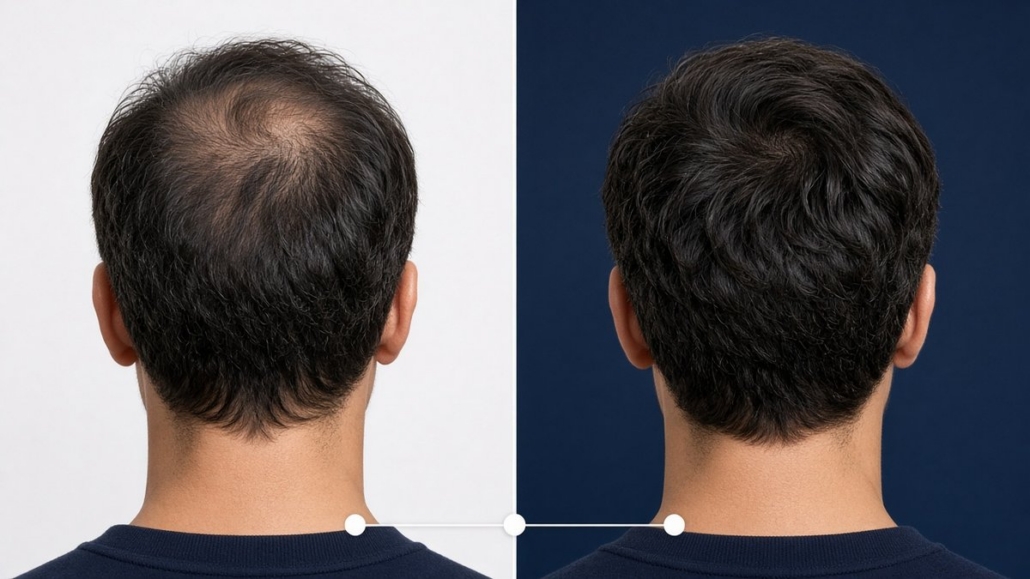
Thinning at the crown, the swirl of hair at the back of the top of the head, is one of the most common patterns of hair loss and one of the hardest to see for yourself. Many people only notice it in a photo or a hotel mirror. Because the crown behaves differently from the hairline, it also needs a different plan. This guide explains why the crown is unique, how an FUE hair transplant and stem cell hair restoration can each play a role, and what to ask hair transplant clinics in Denver before you commit to treatment.
Why the crown is different from the hairline
The hairline frames the face, so restoring it is mostly about design: shape, height and a soft, natural edge. The crown is about coverage. Hair there grows outward from a central whorl in a circular pattern, and the area is larger than most people expect. Covering it with the same density as the front can take a large number of grafts, which matters because the donor area at the back and sides of the scalp is a limited supply. A good plan protects that supply for the future instead of spending it all at once.
Crown thinning also tends to keep progressing. Someone in their late twenties or thirties with an early thin spot may see that spot widen over the next decade. That is why a careful hair transplant clinic will talk about where your hair loss is heading, not only where it is today.
Where an FUE hair transplant fits
With follicular unit extraction (FUE), individual follicular units are removed from the donor area and placed into thinning areas one at a time, without a linear scar. For the crown, the surgeon has to recreate the whorl so the new hair points in the right directions; if the angles are wrong, the crown can look spiky or unnatural even when the graft count is right. If you are comparing options, the Cendant hair transplant program in Denver outlines how FUE and stem cell treatment are planned together, and the FUE hair transplant overview covers the procedure itself.
For many patients the front of the scalp is the first priority, because it has the biggest effect on how you look face to face. The crown is often treated in the same session if the donor supply allows it, or in a later stage. There is no single right answer; it depends on your donor density, the size of the thinning area and your goals.
Where stem cell hair restoration fits
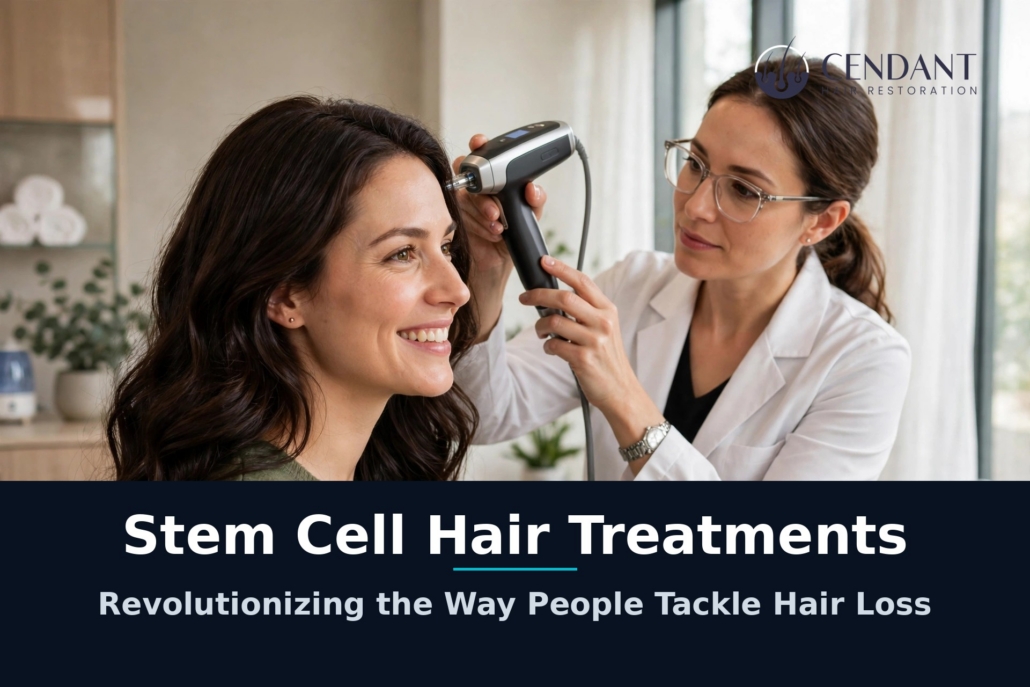
A transplant moves hair; it does not stop the native hair around it from continuing to thin. That is the gap stem cell hair restoration is designed to address. At Cendant, stem cell hair restoration uses regenerative cells collected from your own body, delivered over a series of sessions, with the aim of supporting existing follicles and the scalp environment. For crown thinning, that can mean two things:
- On its own, for people with early or moderate thinning who are not ready for surgery or who want to try a non-surgical path first.
- Alongside FUE, to support the native hair around transplanted grafts so the crown does not open up again around the new hair.
Results vary from person to person, and an honest consultation should explain what is realistic for your type and stage of hair loss.
Questions to ask hair transplant clinics about crown treatment
- How many grafts do you estimate for my crown, and how many for the front? How much donor supply would remain afterward?
- Will the crown be treated in the same session as the hairline, or staged later?
- How will the whorl and growth direction be recreated?
- Is a non-surgical option, such as stem cell treatment, reasonable for my crown first?
- What happens if the thinning around the treated area continues?
- Who performs each step of the procedure, and can I see crown results from other patients?
If a hair transplant clinic quotes a graft number without examining your donor area or asking about your family history, treat that as a reason to get a second opinion. Our guide to choosing among Denver hair transplant clinics covers more of what to compare.
Planning for the long term
The best crown result is one that still looks natural ten years from now. That usually means a conservative, well-angled graft plan, a donor area that is not overharvested, and a strategy for the native hair that is still at risk. Combining an FUE hair transplant with stem cell support is one way Cendant approaches that balance, but the plan should always be built around your own exam.
Crown treatment in Denver and Houston
Cendant Hair Restoration sees patients for crown thinning at its Denver location, and patients in Texas can start with the Houston hair transplant program. Wherever you begin, the first step is the same: a consultation that looks at your crown, your donor area and the direction your hair loss is heading. To get started, request a hair transplant consultation in Denver.