Stem Cell Hair Restoration in Denver | Non-Surgical Hair Regrowth

Non-Surgical Hair Restoration Without a Transplant

The stem cell hair restoration procedure is used as a standalone non-surgical treatment or used in combination with the FUE hair transplant to gain optimal results.

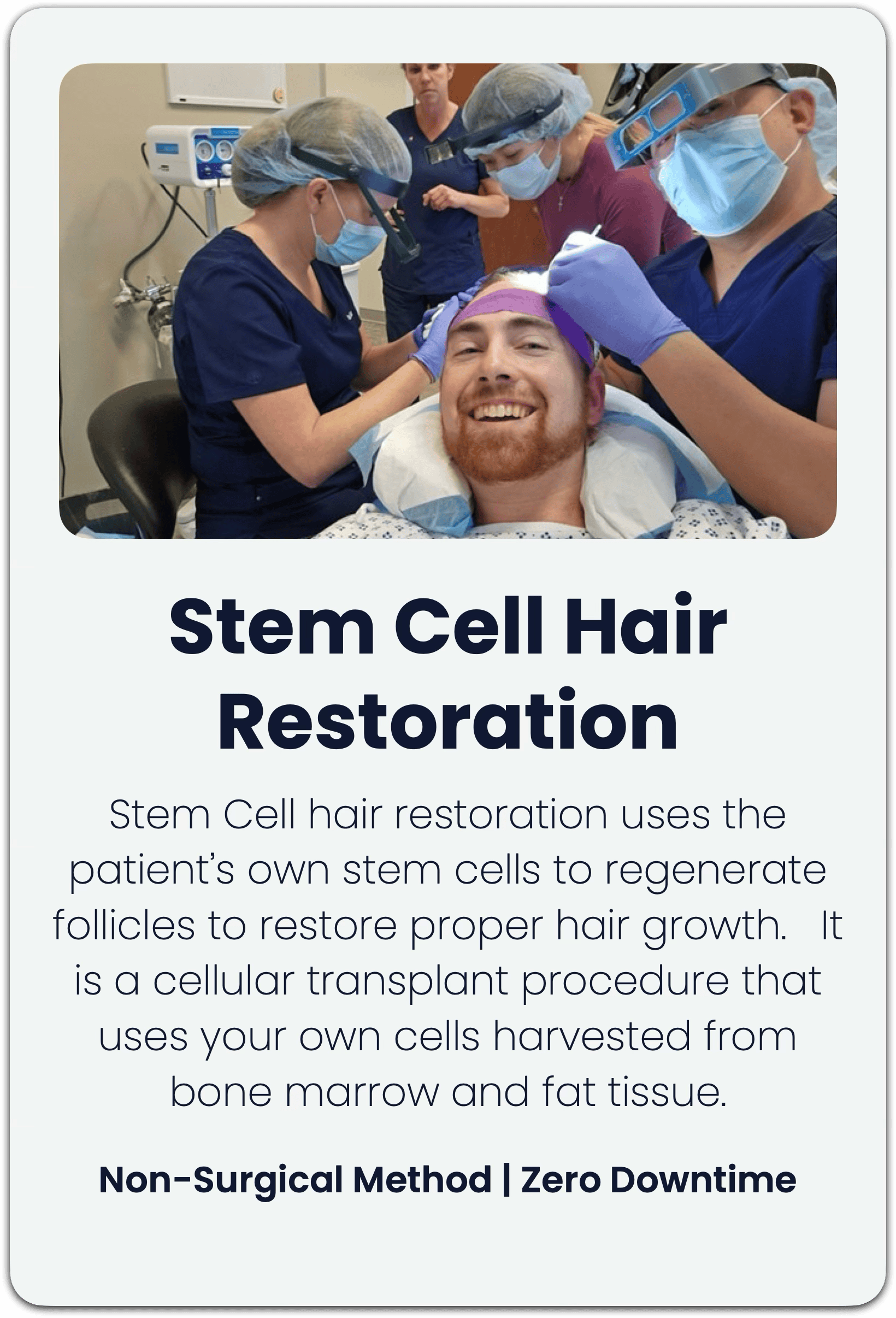
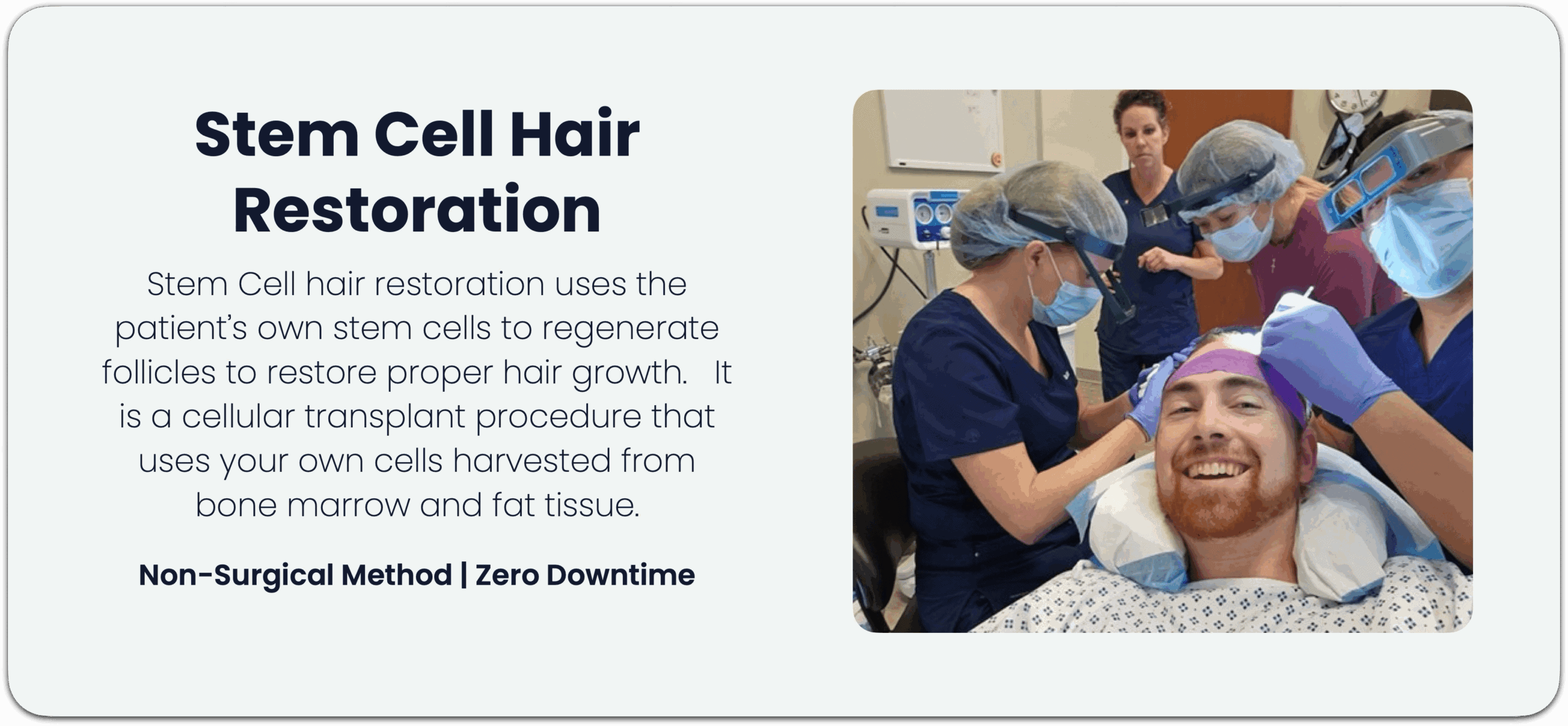
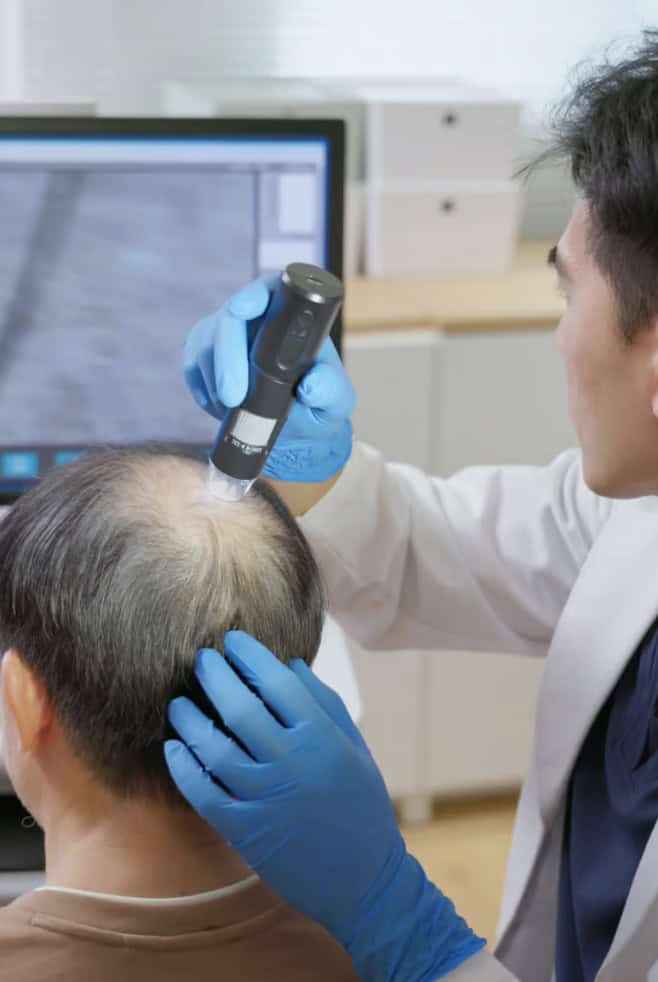
a stem cell hair restoration procedure performed at Cendant

Early Adopters of Regenerative Hair Restoration

Our clinic has spent over a decade focused on the clinical development of regenerative hair therapies. Beginning in 2015, we were at the forefront of evaluating bone marrow stem cells as a viable option for male and female hair loss.

Today, our physicians continue to refine these advanced treatments by combining autologous cell therapies with specialized biological components:

Exosomes and cellular signaling factors

Stem Cells for targeted structural support

Fiber Matrix materials to aid growth factor retention

Having integrated these modalities into our practice early on, our medical team brings a wealth of clinical experience and refined expertise to every patient’s treatment plan.

This use has not received FDA approval. Eligibility will be determined by your physician on an individual basis. Results vary.

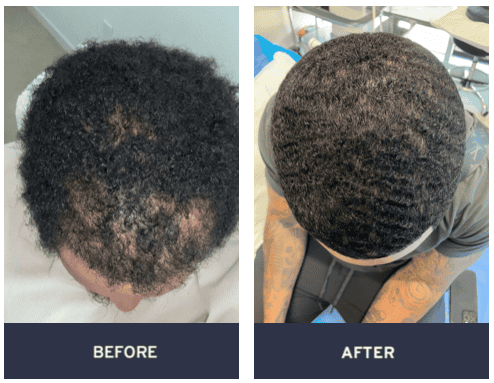
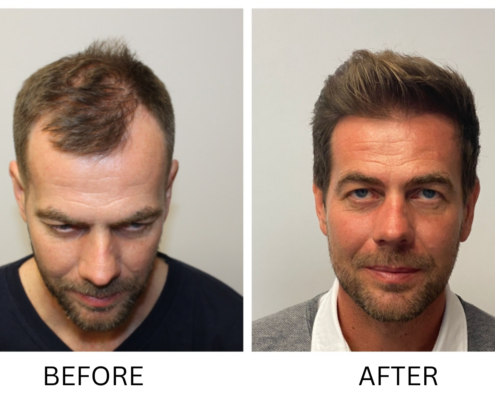
before and after photos of stem cell hair restoration

Your Journey to Thicker, Fuller Hair Starts Now

Join thousands of satisfied patients who have trusted Denver’s leading hair restoration experts. Your confidential, no-obligation consultation is free.

Prefer a phone call? Let’s talk! (720) 705-1958

How The Procedure Works

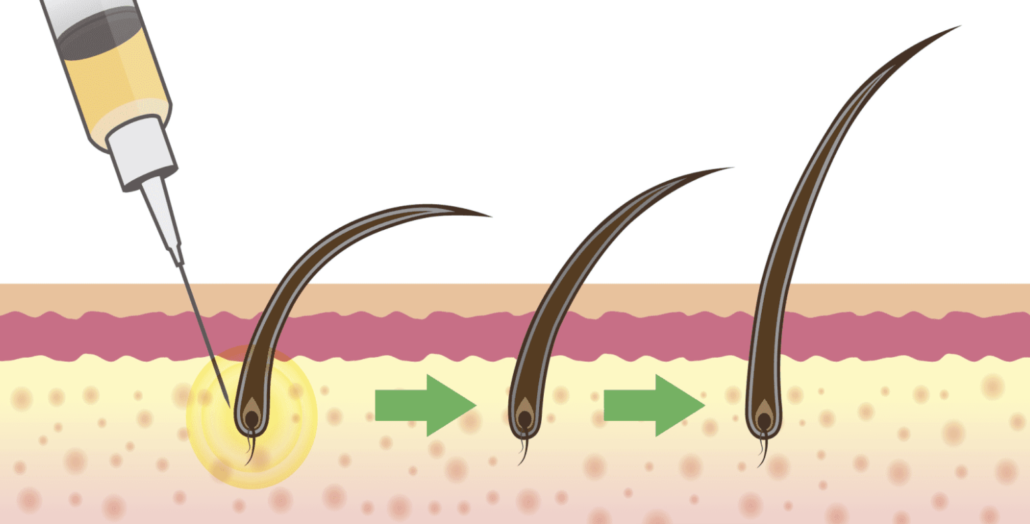
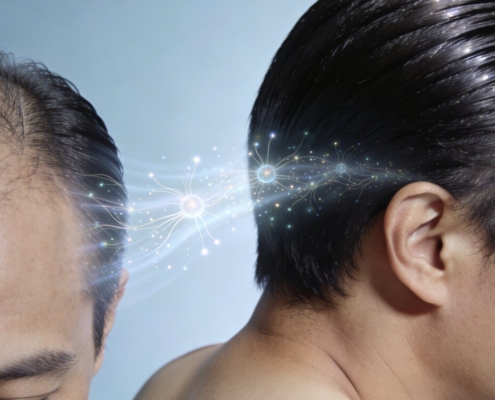
Cendant stem cell hair restoration illustrated

When Stem Cells are introduced through micro-droplet injections into areas of thinning hair, your isolated cells can help build new vascular structure and restore growth to follicles.  The improved blood flow and cell-to-cell signaling is designed to accelerate growth and achieve long lasting results.

The stem cell procedure is used as a standalone non-surgical treatment or used in combination with the FUE hair transplant to gain optimal results.  It is common to inject stem cells along with platelet fibrin and exosomes, which create a powerful medium for hair growth stimulation and future hair loss stabilization. Additionally, extracellular matrix is used to provide a platform for increasing tissue growth and a healthier environment for hair follicles to grow in.

Treatment is typically about 90 minutes. Most people return to usual activity the next day. Timeline: often 2–3 months for early change, growth improvement and less scalp visibility around 5 months with peak growth around month 10.

Stem Cell Hair Restoration in Denver | Non-Surgical Hair Regrowth

Non-Surgical Hair Restoration Without a Transplant

The stem cell procedure is used as a standalone non-surgical treatment or used in combination with the FUE hair transplant to gain optimal results.

a stem cell hair restoration procedure performed at Cendant

Early Adopters of Regenerative Hair Restoration

Our clinic has spent over a decade focused on the clinical development of regenerative hair therapies. Beginning in 2015, we were at the forefront of evaluating bone marrow stem cells as a viable option for male and female hair loss.

Today, our physicians continue to refine these advanced treatments by combining autologous cell therapies with specialized biological components:

Exosomes and cellular signaling factors

Stem Cells for targeted structural support

Fiber Matrix materials to aid growth factor retention

Having integrated these modalities into our practice early on, our medical team brings a wealth of clinical experience and refined expertise to every patient’s treatment plan.

This use has not received FDA approval. Eligibility will be determined by your physician on an individual basis. Results vary.
before and after photos of stem cell hair restoration

Your Journey to Thicker, Fuller Hair Starts Now

Join thousands of satisfied patients who have trusted Denver’s leading hair restoration experts. Your confidential, no-obligation consultation is free.

How The Procedure Works

Cendant stem cell hair restoration illustrated

When Stem Cells are introduced through micro-droplet injections into areas of thinning hair, your isolated cells can help build new vascular structure and restore growth to follicles.  The improved blood flow and cell-to-cell signaling is designed to accelerate growth and achieve long lasting results.

The stem cell procedure is used as a standalone non-surgical treatment or used in combination with the FUE hair transplant to gain optimal results.  It is common to inject stem cells along with platelet fibrin and exosomes, which create a powerful medium for hair growth stimulation and future hair loss stabilization. Additionally, extracellular matrix is used to provide a platform for increasing tissue growth and a healthier environment for hair follicles to grow in.

Treatment is typically about 90 minutes. Most people return to usual activity the next day. Timeline: often 2–3 months for early change, growth improvement and less scalp visibility around 5 months with peak growth around month 10.

non-surgical hair replacement in Denver

Who it is for

Stem cell hair restoration is for men and women with thinning hair who still have follicles in the area, early to mid recession, a widening part, or diffuse thinning that is not yet a shiny bare scalp. This treatment will not lower a receded hairline. It can also suit someone who wants a non-surgical option first, or who may add FUE later. 

hair replacement using stem cells in Houston Texas

Both, when the scalp is mixed

A receded hairline often needs grafts. A thinning crown may still thicken sufficiently with a regenerative stem cell approach. Many patients have both on the same head. FUE and stem cell treatment in one clinic means one plan, not two offices.

we restore hair in Denver Scottsdale and Houston

Signs the follicles are still there

A section of scalp is a candidate when hair is still there, even if it looks weak. Fine, short hairs in a thinning zone mean the follicle is shrinking, not gone. Gradual loss over a few years is a better sign than a patch bare for a decade. A widening part, a see-through crown, or diffuse thinning on top all leave something to treat. Shiny scalp with no hair is not a stem cell case, that area needs grafts.

What Happens on the Day of Your Stem Cell Procedure

Every Cendant hair clinic follows the same personalised care. We’ve built a dedicated team around our doctors to take care of the details, so that our doctors can focus fully on your hair restoration procedure.

Your stem cell hair restoration journey begins with a thorough consultation, where our doctors assess your hair loss pattern, scalp health, and candidacy for regenerative treatment. From there, we walk you through what to expect across your full treatment plan, since stem cell restoration is delivered as a series of 3 sessions rather than a single visit.

Your first treatment includes two brief collection procedures: a bone marrow tap and a fat tissue (adipose) tap, both performed on-site under local anesthesia. These samples are processed to isolate the regenerative stem cells used to stimulate new scalp vascular structure and improved cell signaling.  Following sessions build on this foundation using umbilical cord blood (UBC) cells and exosomes, further supporting scalp health and follicle activity throughout your restoration process. Every step is explained in advance, so you always know what to expect at each stage of your treatment.

The extraction process begins with a bone marrow aspirate, drawn from the back of the pelvic bone (the iliac crest) using a thin needle under local anesthesia. This sample is then processed in a centrifuge to isolate and concentrate the regenerative cells and growth factors it contains, creating what’s known as BMAC (bone marrow aspirate concentrate). The procedure is minimally invasive and typically takes only a few minutes, with most patients experiencing mild, short-lived discomfort at the extraction site.

Once your concentrated stem cells have been prepared, they’re ready to be delivered directly to the areas of thinning. To ensure your comfort throughout the procedure, our doctors first administer a lidocaine ring block, numbing the scalp so the injection process itself is virtually painless. This approach allows for a thorough, precise treatment without unnecessary discomfort.

Using fine 27-gauge needles at a 4mm depth, our doctors carefully inject the concentrated stem cell solution across your dermal layer, targeting the follicles most likely to benefit from regenerative stimulation. This precise technique ensures even distribution and full coverage, giving your scalp the best opportunity to respond to treatment. Most patients are able to resume normal activities the following day.

Recovery from stem cell hair restoration is generally quick and comfortable, with most patients returning to normal daily activities within a day or two. Mild redness or tenderness at the injection sites is common and typically resolves within a few days. Our doctors provide clear aftercare instructions, including guidance on washing your scalp, avoiding strenuous exercise or sun exposure in the days following treatment, and what signs to watch for as your scalp heals. Visible results develop gradually over the following months as the stem cells stimulate follicle activity, with most patients noticing improvements in hair thickness and density within 2-4 months.

Unlock Your Custom Hair Journey – Let’s Talk!

Ready to begin your hair transformation or just curious? We’ve got you covered. Drop your details below, and a friendly expert will reach out to walk you through every step.

Get a Quick Quote

Quick Quote (#9 NEW- HOUSTON)

Prefer a phone call? Let’s talk! (720) 705-1958

Unlock Your Custom Hair Journey – Let’s Talk!

Ready to begin your hair transformation or just curious? We’ve got you covered. Drop your details below, and a friendly expert will reach out to walk you through every step.

Get a Quick Quote

Quick Quote (#9 NEW- HOUSTON)

(720) 705-1958

Research & Wellness Blog
before and after hair transplant photo Scottsdale AZ

FUE Hair Transplants in 2026: Natural Results, Science, and Recovery at Cendant Hair Restoration

Hair loss touches millions, with androgenetic alopecia impacting…

Who Actually Needs the FUE + Stem Cell Combo? Ideal Candidates, Cost-Benefit Analysis & When to Skip It

  The FUE + stem cell combo (also called stem cell-enhanced…

Stem Cell Therapy for Hair Restoration: A Natural Path to Thicker, Fuller Hair

  Androgenetic alopecia (commonly known as male or female…

Stem Cell Hair Restoration FAQs: The Basics

Stem cell hair restoration is a non-surgical, regenerative treatment that uses stem cells to support hair follicles and encourage new growth. At Cendant it is delivered as a series of three sessions that combine your own stem cells with growth factors to improve scalp health and follicle activity. Learn how the stem cell hair restoration procedure works step by step.

A hair transplant moves follicles from a donor area to a thinning area, while stem cell restoration does not relocate any hair. Instead it aims to reactivate the follicles you still have. Cendant explains the difference in its overview of non-surgical hair restoration without a transplant.

Androgenetic alopecia is the medical name for male and female pattern baldness. It causes progressive thinning, a receding hairline, or an isolated bald spot on the crown. Read more in Cendant’s article on same-day stem cell treatment for pattern baldness.

Hair loss affects roughly four out of five men and two in every five women, and androgenetic alopecia is the most common form. Cendant covers the prevalence in its overview of stem cell therapy for hair loss.

No. Stem cell hair restoration is not hair cloning. It uses regenerative cells to stimulate the follicles you already have, rather than growing entirely new follicles in a lab. The science of follicle reactivation is explained in the developments in stem cell hair restoration.

Mesenchymal stem cells are a type of stem cell that releases growth factors, reduces inflammation, and can help reactivate dormant hair follicles. Research cited by Cendant shows MSC-based therapies increase hair density by 15-30% on average. See the evidence in stem cell therapy for hair restoration.

Exosomes are nano-sized messengers released by stem cells that carry growth factors and signaling molecules to nearby cells. They are one of the regenerative tools used in later treatment sessions. Cendant discusses them in the role of extracellular vesicles in hair follicle dynamics.

PRP (platelet-rich plasma) and PRF (platelet-rich fibrin) are concentrates made from your own blood that are rich in growth factors. They are often combined with stem cells to amplify the regenerative effect. Cendant explains the combination in its natural path to thicker, fuller hair.

Stem cell hair restoration is a clinical regenerative treatment, not a widely FDA-approved drug for hair loss. Cendant is transparent about this and links to the FDA’s consumer alert on regenerative products in its candidate guide.

Minoxidil and finasteride can help but require ongoing use, and their results fade when stopped. Stem cell therapy instead targets the dormant follicles and miniaturized growth cycles behind pattern baldness. See why stem cell therapy is promising.

Stem Cell Hair Restoration FAQs: Procedure & Recovery

The process starts with a consultation, followed by a bone marrow aspirate and a fat (adipose) tissue sample taken under local anesthesia. The samples are processed to concentrate regenerative cells, which are then injected into the scalp. Read the full walkthrough of how the procedure works.

Cendant delivers stem cell restoration as a series of three sessions rather than a single visit. The first uses your own bone marrow and adipose stem cells, the second adds umbilical cord-derived cells, and the third uses exosomes. See the three-visit protocol for details.

Cendant uses a combination of sources: your own bone marrow and adipose (fat) tissue in the first session, donated umbilical cord blood cells in later sessions, plus exosomes. The sources are described in the procedure walkthrough.

The bone marrow aspirate is drawn from the back of the pelvic bone under local anesthesia and typically takes only a few minutes. Most patients feel mild, short-lived discomfort at the extraction site. See the aspiration step explained.

Your doctor numbs the scalp with a lidocaine ring block, then injects the concentrated stem cells with fine 27-gauge needles at a 4mm depth across the dermal layer. This targets the follicles most likely to benefit. Details are in the dermal layer injection step.

Each session is relatively quick. The extraction steps take only a few minutes each, and most patients can resume normal activities the following day. See what to expect in the day-of procedure overview.

Downtime is minimal. Most patients return to normal daily activities within a day or two, with mild redness or tenderness that fades within a few days. Read the post-procedure recovery notes.

Yes, local anesthesia only. The extraction sites and the scalp are numbed with local anesthetic, including a lidocaine ring block for the injection step, so the treatment itself is nearly painless. See what happens on the day of your procedure.

Same-day stem cell treatment harvests stem cells from your own fat tissue, concentrates them, and injects them back into the scalp in a single visit. In one published study this approach produced an average 28% increase in hair volume. Learn about same-day stem cell treatment.

Follow your written aftercare plan, which covers washing, avoiding strenuous exercise and sun, and signs to watch as the scalp heals. If anything looks infected, call the clinic rather than waiting. See the post-procedure instructions.

Stem Cell Hair Restoration FAQs: Candidates & Results

The best candidates still have living follicles in the thinning zone, typically with early to moderate thinning and visible miniaturized hairs. They want to improve the environment around those follicles, either as a first step or alongside a transplant. See the full candidate guide.

Completely bald skin with no residual follicle activity is a poor target for stem cell treatment alone. Active infection, unmanaged medical hair loss, or expecting a new hairline without grafts also push the plan back to assessment. Cendant lists these in its weaker-fit profiles.

Yes. Women with diffuse thinning are often good candidates because they typically retain miniaturized follicles rather than going fully bald. One study of 27 women with pattern baldness showed a significant increase in hair volume after stem cell injections. Read the research on stem cell therapy for hair loss.

Early to moderate thinning is actually the sweet spot, because the follicles are still present and responsive. Cendant lists early-stage patients among its better-fit profiles.

If an area is smooth and has no living follicles left, stem cell injections are unlikely to regrow hair there. That scenario is a weaker fit, and graft placement may be a better option. See when stem cells are not the answer.

Most patients notice improvements in thickness and density within 2-4 months, with fuller results developing over 6-9 months. Cendant describes this timeline in the procedure overview.

Results vary, but published research cited by Cendant shows MSC-based therapies increase hair density by 15-30% on average, and adipose-derived stem cells have produced up to 28% hair count increases in trials. See the evidence behind stem cell therapy.

Stem cell restoration is described as long-lasting because it works on reactivating your own follicles. Many patients maintain gains through follow-up care and annual stem cell boosters. Read about long-lasting results.

The treatment aims for lasting improvement, but hair loss can continue to progress, so maintenance sessions may be recommended. Cendant is careful to say results vary by age, extent of loss, and health. See the natural path to thicker hair.

Yes. Cendant documents a 40-year-old man with crown and frontal thinning who saw initial growth in 2-3 months and fully filled-in, denser hair by 6-9 months after the three-visit protocol. Read his transformation.

Stem Cell Hair Restoration FAQs: FUE + Stem Cell Combo

Yes. Stem cell restoration is often used as support around an FUE session to help native hair and graft surroundings. It is not a replacement for graft placement skill. See how Cendant combines stem cells with surgery.

The FUE + stem cell combo adds regenerative elements, such as adipose-derived stem cells or exosomes, to a standard follicular unit extraction transplant. The goal is better graft survival, faster healing, and thicker density. Learn who actually needs the FUE + stem cell combo.

After an FUE transplant, scabs and redness appear in weeks 1-2, transplanted shafts often shed in weeks 3-8, early fine growth may appear in months 3-4, and full caliber shows around months 6-9. Most plans are judged at 12-18 months. See the month-by-month recovery timeline.

Shedding of transplanted shafts is common between weeks 3 and 8, and it is a normal part of the cycle, not a sign of failure. Read the recovery timeline to understand what to expect.

The combination is minimally invasive, offers faster recovery with less swelling and scarring, improves hair growth, and produces long-lasting results. See the five benefits in FUE hair transplant with stem cell.

Advanced Norwood 4-6 patients, younger patients wanting maximum long-term density, previous transplant patients needing repair, and women with diffuse thinning benefit most. Read the ideal candidate profiles.

Skip it for early-stage thinning (stem cells alone may suffice), completely bald shiny areas, tight budgets, or unstable hair loss. See when to skip the combo.

Emerging studies suggest graft survival can improve from roughly 85-95% in standard FUE to 90-95%+ in enhanced cases. See the numbers behind the combo.

The FUE method with stem cells is gentler than traditional transplantation, using no scalpel or sutures, with less pain, swelling, and scarring. Read about the minimally invasive approach.

Stem cell-enhanced FUE, also called regenerative FUE, is a premium upgrade that adds adipose-derived stem cells or exosomes to a standard FUE transplant. The aim is faster healing, better survival, and thicker surrounding density. See what the combo actually involves.

Stem Cell Hair Restoration FAQs: Safety, Cost & Next Steps

Multiple studies cited by Cendant conclude the treatment is safe, with no major adverse events reported in the research it reviews. Because the first session uses your own cells, rejection risk is reduced. See stem cell therapy for hair loss developments.

Side effects are usually mild, including redness or tenderness at the injection sites that resolves within a few days. Read the recovery guidance for what to expect as your scalp heals.

Because the first session uses your own stem cells, there is no rejection risk or adverse immune reaction from those cells. This is one of the key advantages described in stem cell hair restoration as a treatment.

One motivation for regenerative treatment is that medications like minoxidil and finasteride only work while you keep using them, and their results reverse when you stop. Stem cell therapy targets the underlying follicle problem instead. See the comparison in stem cell therapy for hair loss.

The FDA has warned consumers about unproven regenerative marketing, so it is worth understanding what is actually used in clinic and what the evidence shows for hair specifically. Cendant points to this alert in its candidate guide.

Cost varies by clinic and protocol. As a reference point, stem cell enhancement added to a transplant typically costs $2,000-$8,000 on top of the procedure. Cendant publishes transparent cost-benefit numbers.

Standard FUE typically runs $6,000-$15,000 in the US, with stem cell enhancement adding $2,000-$8,000, for a combined $8,000-$20,000+. See the full cost breakdown.

For advanced cases or high expectations, the added cost can pay off through better graft survival and fewer touch-ups. For basic coverage with strong donor hair, it rarely justifies the premium. Cendant walks through the cost-benefit analysis.

Pricing depends on your hair loss pattern and treatment plan, so a personal assessment is the only accurate way to quote. You can request a quick quote from Cendant.

The first step is a consultation where a physician assesses your hair loss pattern, scalp health, and candidacy. You can book a consultation or request a quote through Cendant’s stem cell hair restoration page.

© Copyright 2025. Cendant Hair Restoration.