
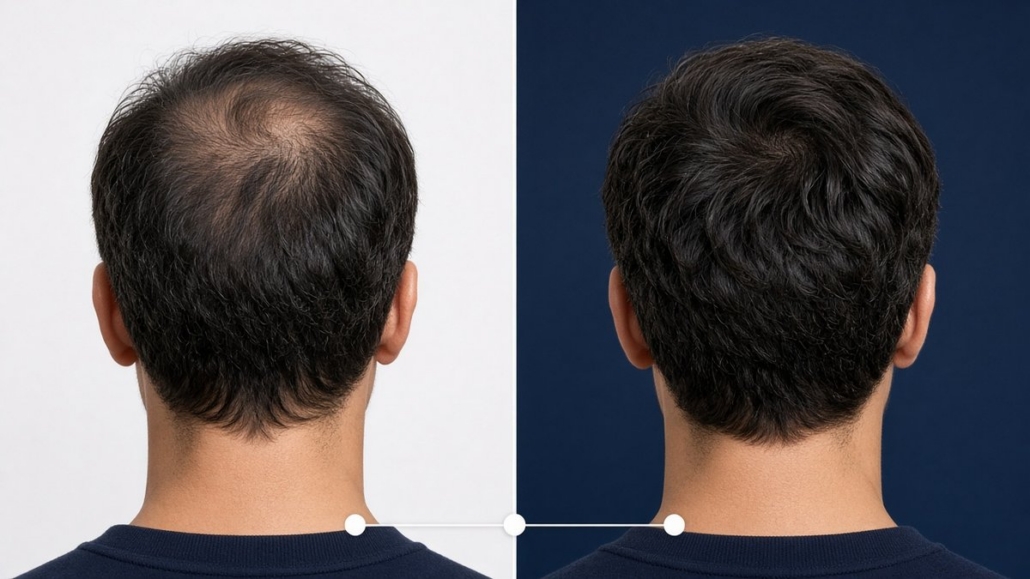
Stem Cell Hair Restoration: Month-by-Month Before and After Results
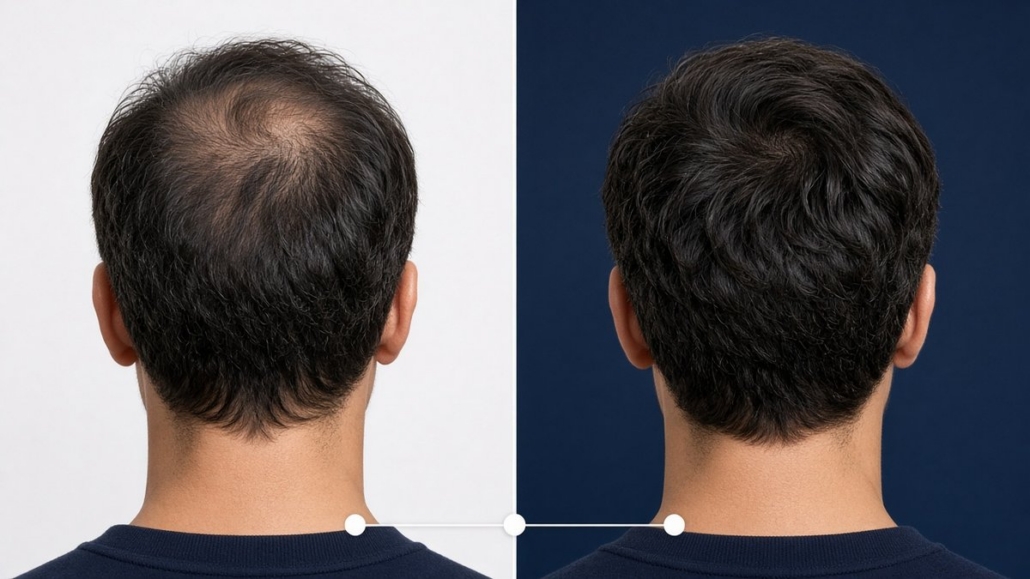
Stem Cell Hair Restoration: Month-by-Month Before and After Results
If you are considering a stem cell hair loss treatment, one of the first questions you probably have is simple: when will I actually see a difference? It is a fair question, and the honest answer is that change happens gradually. Hair grows in cycles, and any treatment that aims to support the follicles has to work within those cycles.
This guide walks through what patients commonly experience after stem cell hair restoration, from the first couple of weeks to the one-year mark. We will also cover the factors that influence outcomes, how this approach compares with a hair transplant, and what to ask before you book. Everyone’s results are different, so think of this as a general roadmap, not a promise.
First, a Quick Look at How Stem Cell Hair Restoration Works
Stem cell hair restoration is a regenerative approach. In general terms, it uses cells and growth factors derived from the patient’s own tissue (often fat or blood, depending on the protocol) and places them in areas of the scalp where hair is thinning. The goal is to support weakened follicles, encourage healthier growth cycles, and improve hair density and quality over time.
It is important to know that regenerative hair treatments are still an evolving area of medicine. Research is ongoing, protocols differ from one provider to another, and stem cell products are not FDA-approved as a cure for hair loss. A trustworthy provider will explain the specific procedure they offer, what evidence supports it, and what it can and cannot reasonably do for you.
Because the treatment works with existing follicles rather than moving new ones into place, it tends to be best suited to people who are thinning, not people who are completely bald in an area.
Weeks 1-2: Recovery and Settling In
The first two weeks are mostly about healing, not visible hair change.
What many patients notice:
- Mild tenderness, swelling, or redness at the treated area of the scalp, and at the harvest site if tissue was collected
- Small amounts of bruising that fade over several days
- A return to most normal daily activities within a short time, following your provider’s instructions
What you probably will not notice yet: new growth. That is completely expected. At this stage, the focus is on following aftercare instructions closely, such as how and when to wash your hair, which products to avoid, and when you can resume exercise.
Month 1: Quiet on the Surface
Around the one-month mark, the scalp has usually settled and any procedure-related discomfort has typically resolved. Your hair may look much the same as it did before treatment.
This is a good time to:
- Take consistent photos in the same lighting and angles, so you can compare later
- Keep up with any recommended maintenance treatments or topical routines
- Be patient; the work happening at the follicle level is not visible yet
Month 3: Early Signs for most Patients
By around three months, most patients begin to notice changes. These may include:
- Less day-to-day shedding in the shower or on the pillow
- Fine, soft new hairs along the part line or crown
- Hair that feels slightly healthier or easier to style
Others see little change at this point, and that does not necessarily mean the treatment is not working. Hair growth is slow, typically around half an inch per month, so early improvements are easy to miss in the mirror. Comparison photos are often more revealing than daily observation.
Month 6: A More Noticeable Difference
Six months is often when patients and providers can start to make a more meaningful before and after comparison. If the treatment is working well for you, you may see:
- Improved coverage in thinning areas
- Hairs that appear thicker in diameter
- A fuller look when your hair is styled
- A slowdown in the progression of thinning
- less visible scalp
Your provider will usually schedule a follow-up around this time to review progress, compare photos, and discuss whether any additional sessions or complementary treatments make sense for your goals.
Month 12: Evaluating Your Results
Around the one-year mark is generally when the full effect of a stem cell hair restoration treatment can be assessed. By now, new and strengthened hairs have had time to move through their growth phase and reach a length where density changes are easier to see.
In general terms, results at 12 months can range from a clear improvement in thickness and coverage to more modest changes, such as stabilizing hair loss that was previously getting worse. For some people, holding on to the hair they have is itself a valuable outcome.
It is also worth remembering that most common hair loss, such as androgenetic alopecia (pattern hair loss), is progressive. Regenerative treatment does not stop the underlying process permanently, so many patients discuss a maintenance plan with their provider to help protect their results over time.
What Results Typically Look Like
When you look at stem cell hair restoration before and after photos, keep these points in mind:
- Changes are usually gradual and natural-looking, because the treatment works with your own follicles
- Improvements tend to show up as increased density and thicker strands rather than a dramatically new hairline
- Results vary from person to person, even among people with similar hair loss
- Lighting, hair length, styling, and camera angle can all affect how photos look, so ask to see consistent, unedited images
A reputable provider will show you representative examples, not just the most dramatic cases, and will be honest about what is realistic for your situation.
Factors That Affect Your Outcome
No two patients respond in exactly the same way. Here are some of the factors that can influence results:
Type and cause of hair loss. Pattern hair loss, stress-related shedding, hair loss tied to medical conditions, and scarring alopecia behave very differently. A proper diagnosis comes first.
Stage of hair loss. Regenerative treatment relies on living follicles. People with early to moderate thinning are generally better candidates than people with large, fully bald areas.
Age and genetics. Your age, family history, and hormonal factors can affect how quickly hair loss progresses and how your follicles respond.
Overall health. Nutrition, thyroid function, iron levels, certain medications, smoking, and chronic stress can all play a role in hair health.
Adherence to aftercare. Following post-treatment instructions, attending follow-ups, and sticking with any recommended maintenance can make a real difference.
Combined treatments. Some patients pair regenerative treatment with other approaches recommended by their provider. Always discuss any medications or supplements with a medical professional before starting them.
The provider and protocol. How cells are collected, processed, and placed varies by clinic. Experience and careful technique matter.
How It Compares with a Hair Transplant
Stem cell hair restoration and a hair transplant are different tools for different situations, and many hair transplant clinics offer both.
Stem cell hair restoration:
- Aims to strengthen existing follicles and improve density
- Generally best for thinning hair rather than fully bald areas
- Typically involves less downtime than surgery
- Results develop gradually and may benefit from maintenance
FUE hair transplant:
- Moves healthy follicles from a donor area (usually the back of the head) to thinning or bald areas
- Can restore hair where follicles are no longer active, including the hairline
- Is a surgical procedure with a longer recovery period
- Transplanted hair generally grows in over many months
Some patients are good candidates for one approach, some for the other, and some for a combination, such as an FUE hair transplant paired with regenerative treatment to support surrounding native hair. An experienced hair transplant clinic should evaluate your scalp, donor area, and goals before recommending either option.
Searching for “Stem Cell Hair Restoration Near Me”? What to Ask
If you are searching for stem cell hair restoration near me, take time to compare providers. Good questions include:
- Who will perform my procedure, and what is their medical training?
- What exactly is your protocol, and where do the cells come from?
- Am I a good candidate, or would another approach suit me better?
- What results are realistic for my type and stage of hair loss?
- What does follow-up and maintenance look like, and what does it cost?
Be cautious of any provider that guarantees results, calls the treatment a cure, or pressures you to commit on the spot.
Important Disclaimer
This article is for general educational purposes only and is not medical advice. Results of stem cell hair restoration vary from person to person, and no specific outcome can be guaranteed. Stem cell treatments for hair loss are an evolving field and are not FDA-approved as a cure for hair loss. Please consult a qualified medical professional to discuss your individual diagnosis, candidacy, risks, and options.
Talk with Cendant Hair About Your Options
At Cendant Hair, our team, led by Medical Director Dr. Dan Lann, MD, offers both stem cell hair restoration and FUE hair transplant procedures. During a consultation, we will look at your hair loss pattern, talk through your goals, and give you an honest view of which approach, if any, may be a good fit.
We see patients at our locations in Denver / Greenwood Village, Colorado; Houston, Texas; Scottsdale, Arizona; and Dallas, Texas.
Ready to take the next step? Get a quick quote or schedule a consultation with our team today. You can also learn more about our stem cell hair restoration treatment.


Leave a Reply
Want to join the discussion?Feel free to contribute!